











With so much to do during the day, it can be difficult to wind down after work. Whether you have children to look after, exercise habits to stick to, social media to browse or dinners to prepare, the day can be extremely demanding.
For women, there are additional demands throughout the cycle, pregnancy, perimenopause and menopause that can make sleeping difficult at times.
The good news is that there are habits you can develop daily to improve your sleep.
You don’t need to purchase a sleep gadget or change your bedtime routine. Focus on improving your sleep hygiene by incorporating some of the basics into your sleeping routine.
Read on to find out more about improving your sleep naturally, including steps you can start taking this very evening.
How Much Sleep Do Women Need?
Women require between 7 and 9 hours of sleep each night. The exact amount of sleep needed can vary from woman to woman. The quality of sleep also plays a role in how rested a woman feels each morning.
Instead of focusing only on the number of hours that you slept, instead focus on how you feel during the day.
Ask yourself the following questions:
- Are you feeling reasonably refreshed when you wake up?
- Can you focus on your work during the day?
- Are you feeling sleepy throughout the day?
- Do you have trouble sleeping?
- Do you rely on several cups of coffee throughout the day to feel awake?
If you answer “yes” to any of these questions, it is worth noting that there may be a reason for your poor sleeping habits.
Why Do Women Sometimes Have Trouble Sleeping?
There are several potential reasons that a woman may experience sleep problems. Stress, an irregular sleeping schedule, caffeine intake, medications, pain levels, medical conditions, and even lifestyle habits can all lead to sleep problems for women.
Women can also experience sleep changes due to hormonal shifts in their bodies.
Many women struggle with sleep difficulties during their menstrual cycles. Pregnant women often have trouble sleeping due to bodily discomfort. Women going through menopause may have insomnia due to hot flashes and night sweats.
In these cases, the best sleep routine for a woman may change according to the changes in her life.
There is no such thing as the perfect sleep routine for every woman. However, there may be certain sleep habits that work best with the body and life styles of specific women.
12 Natural Ways to Get Better Sleep
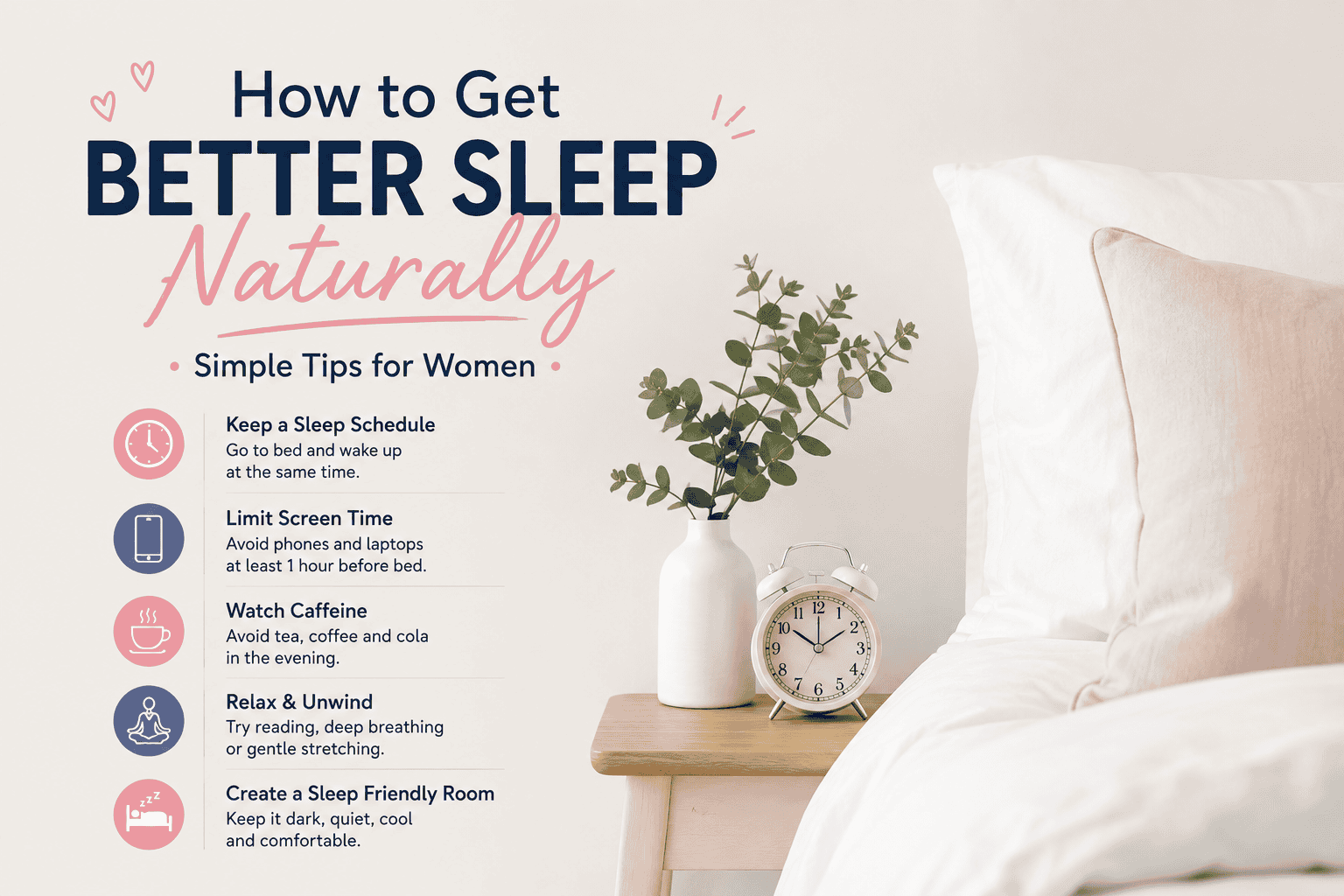
1. Maintain the same sleep and wake time
Your body has an internal clock, also known as the circadian rhythm. Following a regular schedule can help to regulate your circadian rhythm.
Try to go to bed and wake up at the same time each day, even on the weekends.
For example, you may decide that your sleep schedule will be:
- 10:30 p.m. – bedtime
- 6:30 a.m. – wake up
These times may not necessarily be your own; however, they will provide enough time for sleep while corresponding to your schedule.
If you currently go to sleep very late, it is best to gradually adjust your bedtime rather than trying to adjust it all at once.
Establishing a routine is one of the easiest habits to start in regard to sleeping better.
2. Get Natural Light During the Day
Light helps to regulate your body clock.
Try to spend some time outside during the day – especially in the morning. Perhaps take a walk, or have your tea outside.
This is especially useful if you spend most of your day indoors.
Combine this with one other healthy habit:
- Morning sunlight + a short walk = two healthy habits that can help to regulate your body clock.
3. Create a 30-Minute Wind-Down Routine
Do not expect your brain to transition from “busy mode” to “sleep mode” all at once.
Give yourself a transition period.
Give yourself 30 minutes before bed to:
- turn down bright lights in the room
- put your phone away
- take a warm shower
- read a few pages of a book
- do some gentle stretching
- take a few deep breaths
- prepare your clothes for the next day
- write down the tasks you will do the next day
You don’t have to do all of these at once.
Even if you only have 20 minutes and you are a working mother, it is still helpful.
All you have to do is create a routine for your brain to know that the day is over.
4. Reduce Screen Time Before Bed
Because of two main reasons, the use of electronic devices can make sleep more difficult to attain before bedtime.
First, the bright light from screens in the evening can affect your sleep cycle. Second, the content on screens can keep your brain active and make it difficult to relax.
Try keeping your phone away from your pillow.
Here are some suggestions to help you fall asleep more easily:
- Use Do Not Disturb on your phone
- Stop responding to work messages at a set time after work
- Charge your phone away from your bed
- Replace scrolling on your phone with reading or music
You do not have to completely give up your technology. Just making sure your phone is not the last thing that you see in your sleep cycle will help you fall asleep more easily.
5. Watch Your Evening Caffeine
For many women in India, a cup of chai or coffee is part of the daily routine.
Caffeine can be helpful during the daytime. However, consuming caffeine late at night can interfere with sleep for some individuals.
If you struggle with sleep, try to consume your last caffeinated drink earlier in the evening.
Some alternatives to coffee that you can have before you go to sleep include:
- Herbal tea
- Warm milk
- Warm water
You do not have to make drastic changes to your current evening routine right away. Simply try to move the time you consume your last cup of coffee earlier in the evening to see if your sleep improves.
One of the recommended sleeping habits includes avoiding caffeine between the afternoon and evening hours to improve sleep quality at night.
6. Avoid Heavy Meals Close to Bedtime
For some people, having a very heavy or spicy meal late at night can cause discomfort.
Allow your body some time to digest after finishing dinner.
If you are hungry later, having a snack before sleeping may be better for you than sleeping when you are extremely hungry.
You do not have to prepare a complicated dinner. A dinner that includes vegetables, protein, and carbohydrates is the best meal for your health.
7. Exercise During the Day
Exercising your body regularly will help you feel better physically and when you sleep.
You do not have to spend an hour at the gym every day.
Try:
- Walking
- Yoga
- Strength training
- Cycling
- Dancing
- Swimming
- Home workouts
If intense exercise close to bedtime makes you feel more alert, try scheduling your workouts earlier in the day. For example, instead of long workouts close to bedtime, take a 20-minute walk after work.
Regular physical activity is also recommended for healthy sleep habits.
8. Make Your Bedroom Sleep-Friendly
Your bedroom does not need to look like a luxury hotel. However, it should be a sleep-friendly environment.
Ensure that your bedroom is:
- Dark enough
- Quiet
- Comfortable
- Not too hot or too cold
- Free from unnecessary distractions
If outside light is a problem, curtains or an eye mask may help.
If noise is an issue, earplugs or noise with a steady beat may help.
The mattress and pillow should also be comfortable.
A better sleeping environment may help you to avoid waking up due to small distractions.
9. Give Your Mind a Place to Empty Out
Sometimes your body is tired but your mind is still working.
While lying in bed, your thoughts may include questions such as:
- Did I send that email?
- What did I need to buy tomorrow?
- Did I finish that project?
- Why did I say that?
Keep a small notebook nearby and make two lists:
Tomorrow:
- Send email
- Buy groceries
- Call school
Worry:
- Think about this tomorrow at 10 a.m.
Keeping these lists can help separate sleep from responsibility in the day ahead.
10. Try Gentle Relaxation
Relaxation techniques can be beneficial to your sleep.
Try slow breathing:
- Sit or lie in a comfortable position.
- Relax your shoulders.
- Breathe slowly.
- Focus on how it feels to breathe.
- Continue for several minutes.
Other techniques to try include stretching, meditation, reading, or progressive muscle relaxation.
Relaxation techniques have been studied as complementary approaches to sleep and can assist in improving sleep. However, they are not a cure for chronic insomnia.
11. Do Not Force Yourself to Sleep
This sounds strange, but sometimes trying extremely hard to fall asleep can cause frustration.
You look at the clock.
You start to worry.
You calculate how many hours of sleep you have left.
You worry again.
If you are awake and frustrated, get out of bed and do something quiet in a dim light. Go back to sleep when you feel sleepy.
This strategy is known as stimulus control, which treats insomnia.
Do not turn this into another task that you have to do to fit into your routine.
Stimulus control aims to separate the bed from insomnia and worrying when awake.
12. Avoid Depending on “Natural” Sleep Products
The fact that a product is marketed as natural does not mean that it is safe for consumption or effective in producing the desired sleep results.
If the product contains herbs, gummy bears, teas, oils, or other supplements that claim to aid sleep, be sure to read the labels very carefully.
If you are still having trouble sleeping, and if you take any medicines or have any health conditions, be sure to discuss the use of these sleep supplements with one of your healthcare providers.
The Office on Women’s Health also recommends that women discuss sleep-related problems with their healthcare providers before regularly using over-the-counter products that may aid sleep.
A Simple Nighttime Routine for Busy Women
A simple routine that can be followed before sleeping may be all that is necessary for women who are struggling with sleep.
No two-hour routine is necessary; try this simple example:
- 8:30 p.m. Finish dinner or main tasks
- 9:00 p.m. Reduce bright lights and work messages
- 9:15 p.m. Prepare to go to sleep the next day
- 9:30 p.m. Shower or stretch
- 9:45 p.m. Read or breathing exercises
- 10:00 p.m. Go to bed
- 10:30 p.m. Aim to be asleep
These times are an example of when women should be sleeping.
However, if a woman finds that she sleeps better at a different time, she should sleep when she feels like she needs to go to sleep.
The important part is the order in which the women should follow these tasks.
Sleep Tips for Different Stages of Women’s Lives
During Your Period
Women who feel that they have changes in their sleep while they are going through their period can track their sleep cycles and sleep patterns for a few months to see if their sleep changes with their period.
Look for patterns such as:
- Difficulty falling asleep
- More waking during the night
- Cramps
- Mood changes
- Unusual tiredness
Noting these patterns will help you to understand your body and provide information to your healthcare professional regarding any sleep problems you may be experiencing.
During Pregnancy
Pregnancy can make sleep difficult for a variety of reasons.
Rather than attempting to implement random sleep products, speak to your healthcare professional about any sleep problems you are experiencing.
This is also a great time to focus on your sleep habits during pregnancy.
During Perimenopause and Menopause
The hormonal changes that happen during perimenopause and menopause can make sleep more difficult. Hot flashes and night sweats can make sleep difficult, as well as the change in hormone levels can make sleep difficult.
Some habits that may help with sleep during this period include:
- Keeping the bedroom comfortable and cool
- Exercising regularly
- Limiting caffeine later in the day
- Reducing screen use before bedtime
- Keeping consistent sleep and wake times
- Discussing sleep problems with a healthcare provider
It is not normal for sleep problems to worsen with age. There are treatments for sleep problems during this period of time.
A 7-Day Sleep Reset for Women
If you’d like to improve your sleep without changing too much, try this week-long plan.
| Day | One Small Goal |
| Day 1 | Choose a wake-up time for when you want to get up |
| Day 2 | Get some natural light during the morning |
| Day 3 | Move your last drink of caffeine to the morning |
| Day 4 | Stop working and doing stressful tasks after you go to sleep |
| Day 5 | Create a routine to wind down 30 minutes before sleep |
| Day 6 | Keep your bedroom darker and quieter than before |
| Day 7 | Reflect on your sleep schedule and any changes you made to find the best sleep routine for you |
Do not worry if you fall short of meeting each goal.
There is no need to strive for perfection with your sleep schedule. Just find habits you can maintain over time.
Common Sleep Mistakes to Avoid
- Staying in bed while scrolling: You may think you are relaxing, but social media can keep your brain active.
- Changing your sleep schedule every weekend: Sleeping and waking at completely different times from the rest of the week can make it harder for you to maintain your sleep routine.
- Using caffeine to cover up poor sleep: While caffeine can make you feel more awake for a while, it does not provide the same restorative sleep as sleep.
- Exercising only at midnight: Exercise is good for your health. However, if you find that exercising at the midnight hour makes you more alert during the day, try to exercise earlier in the day.
- Watching the clock all night: Looking at the clock all night can create sleep anxiety and cause you to be even more alert when you do fall asleep.
- Assuming every sleep problem is caused by stress: Stress is common, but it is also possible that your sleep problems are caused by some medical condition or sleep disorder.
- Taking sleep medicines or supplements without advice: Your sleep problem might be a symptom of another health issue. If this is the case, take care to only use these products if prescribed by and discussed with your healthcare professional.
When Should You Talk to a Doctor?
It is normal to have occasional poor sleep.
However, sleep problems should not be ignored.
You should consider speaking to a healthcare professional if any of the following apply to your sleep issues:
Insomnia is characterized by:
- Difficulty falling asleep
- Difficulty staying asleep
- Sleeping excessively during the day
- Loud snoring or choking when waking
- Waking up with headaches or feeling extremely tired
- Experience hot flashes or night sweats
- Think that one’s medicine or health condition is affecting sleep
Women are also subject to insomnia and sleep disorders due to hormonal changes in their bodies.
For those with chronic insomnia, sleep hygiene alone may not be sufficient. According to the American Academy of Sleep Medicine, cognitive behavioral therapy for insomnia (CBT-I) is an effective treatment for chronic insomnia.
Frequently Asked Questions
What can I do to get better sleep naturally?
A regular sleep and wake schedule that allows your body enough time to sleep, to be active during the day, to get natural light and to avoid caffeine late in the day will improve the quality of your sleep.
How many hours of sleep does a woman need?
Adult women need between 7 and 9 hours of sleep each night. The sleep needs of each woman may be slightly different.
Can exercise help me to sleep better?
The regular exercise of your body can aid in sleeping better. However, if you find that after exercising that you are feeling more awake than asleep, then try to exercise earlier in the day.
Does caffeine affect sleep?
Caffeine can affect sleep, especially if you consume it later in the day. If you have sleep problems, try to consume your last caffeinated drink earlier in the day to see if that helps.
Can hormones affect women’s sleep?
Yes, the sleep cycles and hormones of women can change throughout their lives. At different points, women may have sleep problems due to hot flashes, night sweats, discomfort from pregnancy, or hormonal changes associated with menopause.
Is it okay to use my phone before bed?
Using a phone before bedtime is not recommended; using screens before bedtime can make it harder to fall asleep. Keeping your phone away from your bed will make it easier to avoid using it before bedtime.
What should I do if I cannot fall asleep?
Try not to force sleep. Often, if you are awake and starting to become frustrated about sleeping, you should get out of bed and do something calm under dim light until you feel sleepy.
Are natural sleep supplements safe?
Not necessarily. Just because a sleep supplement is “natural” does not mean it is safe for everyone. Always talk to a healthcare professional prior to taking sleep supplements, especially if you are pregnant, breastfeeding, taking medicines, or have a medical condition.
Final Thoughts on Sleep
The best way to improve your sleep does not necessarily require a perfect lifestyle.
Choose one or two changes to start implementing into your life right away. For instance, try to get up at the same time each morning. Spend time outside during the day and exercise. Limit your consumption of caffeine after noon. Ensure you put your phone away before you go to sleep.
Finally, listen to your body. If you are experiencing poor sleep but are otherwise enacting sleep hygiene suggestions and following a healthy lifestyle, talk to a healthcare professional to determine the cause of these sleep issues.
A good night’s sleep does not require perfectly implementing all sleep hygiene suggestions. However, implementing even a few of these suggestions can make a significant difference in the sleep quality that you enjoy during the day.